Dongshan Duck Head — Origin, Method, and the Definitive Chiayi Guide
9 questions · a one-minute read
01Basics
What is Dongshan Duck Head?
Braised, then fried: slow-braised in spices for 6 hours, then fried until the outside becomes a crisp, sweet shell.
Braise
0 hrs
Fry
until crisp
= Crisp glaze outside, braised through
Read the full answerShow less
Dongshan duck head is one of southern Taiwan's signature street snacks. The cuts — head, neck, wing, foot, gizzard — are slow-braised in soy, sugar, star anise, cassia and clove for at least six hours, then glazed with malt sugar and fried until the skin turns crisp. Glossy skin, deeply seasoned meat, even the bones yield gelatin worth gnawing for.
"Dongshan" refers to Dongshan District in Tainan, the dish's birthplace. "Duck head" is loosely used for any braisable cut of duck, not literally only the head. Today the dish is found in Chiayi, Taipei, and Kaohsiung, and cold-chain delivery has turned a regional specialty into a nationwide one.
What separates dongshan duck head from generic braised meat is the two-step braise-then-fry technique. Most Taiwanese braises stop after the simmer. Dongshan duck head insists on the fry — that's when the surface sugars caramelise into the signature lacquered shell. Skip it and the flavour collapses by a full register.
- Why "duck head"? Is it really only the head?
- "Dongshan" refers to Dongshan District in Tainan — the origin. "Duck head" is generic, covering all braisable duck cuts: head, neck, wing, foot, gizzard, tongue, and intestine. Not literally just the head.
- How does it differ from tea-smoked or Peking duck?
- Dongshan duck head: braise + fry, Taiwanese street food, deep glaze and warm spice. Tea-smoked duck: cure, smoke over tea and camphor, fry — Sichuan banquet. Peking duck: northern roast, crispy skin sliced with pancakes — main-event meal. Three techniques, three textures, three occasions.
02Origin
From Tainan Dongshan to Chiayi: Origin and Evolution
A 1970s temple-fair snack from Dongshan, Tainan that took off at Chiayi’s Wenhua Road night market in the 1990s.
1970s
Dongshan
temple fairs
1990s
Wenhua Rd
night market fame
1997
Yellow Girl
opens its stall
2000s
Cold chain
ships island-wide
Read the full answerShow less
The exact origin of dongshan duck head is unknown. The most-cited account places it in the 1970s, when temple-festival vendors in Tainan's Dongshan district started selling this braise-and-fry duck. The local duck-farming industry made the ingredients abundant and the technique evolved on the street, as workers' late-night food paired with rice wine.
From the 1990s the dish migrated north — Kaohsiung, Taichung, Chiayi, and Taipei. Chiayi's Wenhua Night Market in particular became a second capital for the dish; the market's brutal level of competition meant only the best survived, and the survivors became canonical. Today "Chiayi dongshan duck head" sits alongside "Tainan dongshan duck head" as one of two recognised schools.
From the 2000s onward, cold-chain logistics and vacuum packaging turned the dish from regional street food into a shippable gift-grade item. See the full history story.
- Where is dongshan duck head from?
- Dongshan duck head originated in Dongshan District, Tainan, around the 1970s as a temple-festival and night-market snack. It spread north in the 1990s — Chiayi, Taichung, Taipei — and Chiayi's Wenhua Night Market became its second capital.
03Method
The Six-Hour Braise: Why Time Matters
The sauce has to work through skin, fat, meat and bone membrane — rush it and only the surface tastes of anything.
Slow braise
0hrs
- Skin
- Fat
- Meat
- Bone membrane
1
Clean
drain blood
2
Blanch
30 sec
3
Braise
4–6 hrs
4
Rest
let it set
5
Fry
until crisp
Read the full answerShow less
Dongshan duck head braises in stages over long hours. High-heat short braising only flavours the surface. Duck head is dense — the sauce must penetrate four layers: skin, subcutaneous fat, meat, then bone membrane. Each layer needs time.
The canonical steps:
- Clean and de-gamy: salt-water soak, rinse, drain.
- Blanch: 30 seconds in rolling water; skin tightens, impurities rise.
- Braise: soy, rock sugar, rice wine, star anise, cassia, clove, bay. Low simmer 4–6 hours. High at first, then low, then off-heat steep.
- Drain and rest, letting flavours set and the skin partially dry.
- Fry slowly until the skin crisps and the sugars caramelise into the signature amber lacquer.
"Master stock" matters as much — keep a portion daily, replenish, never fully replace. Aromas build over decades. See the full method and recipe analysis.
- How is it made? How long does it take?
- The core technique is "braise then fry." Cuts simmer in soy, sugar, star anise, and cassia for at least six hours, then drain and fry until the skin is crisp and the glaze turns glossy.
04Cuts
Cut Guide: Which One Are You?
No bones: duck breast. Love to gnaw: necks and wings. Seasoned fans: heads. Not sure: a mixed pack.
Head
gelatin, bony
Neck
for gnawing
Wing
springy skin
Breast
boneless
Feet
skin, tendon
Gizzard
crunchy
Tongue
rare
Intestine
springy
No bones → Breast:Boneless and all meat — easy for kids and elders
Read the full answerShow less
"Dongshan duck head" is really a collection of braised duck cuts, each with a distinct texture. First-timers often buy heads only and find their household won't gnaw bones. A pocket guide:
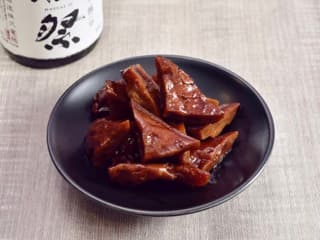
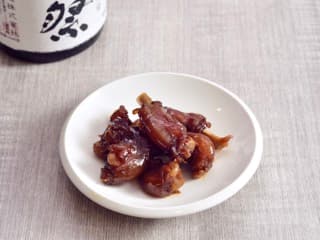
- Duck head (premium): gelatinous, bone-rich, beloved by the people who know. Pairs best with beer or warm rice wine.
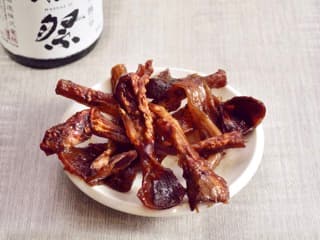
- Duck neck: bony, with the meat tucked between the vertebrae — made for gnawing.
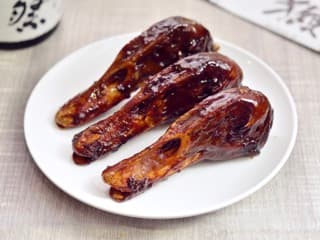
- Duck wing (premium): springy skin and lots of small bones — slow gnawing, great with a drink.
- Duck breast: boneless, all meat. The pick if kids or elders avoid bones.
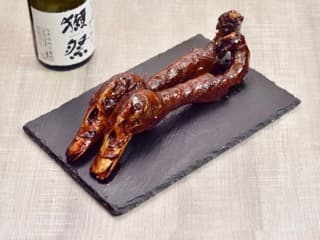
- Duck feet: skin and tendon only — beer + game-day food.
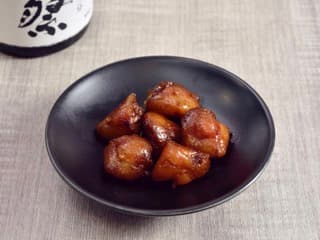
- Duck gizzard: crisp, springy, a totally different texture.
- Duck tongue (premium): limited supply, singular bite. A collector's cut.
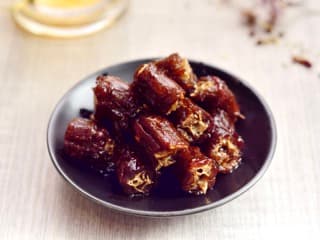
- Duck intestine: bouncy, takes flavour fast — the connoisseur's marker.
First time? Grab the mixed box — a few of each. Repeat on what your household goes back for. Read the head-vs-neck-vs-wing breakdown.
Prices, portions and nutrition facts for every cut are side by side on the menu page.
- Which cuts are best for gifting?
- The classic mixed gift box (head, wing, neck, gizzard) is safest — broadly enjoyable. For kids and elders who avoid bones, add boneless duck breast. Avoid giving feet-only, intestine-only, or gizzard-only to unfamiliar palates.
05Reheat
How to Reheat: Three Methods That Work
Air fryer at 180°C for 6 minutes is best, oven at 180°C for 8; steaming is easy but softens the glaze. Skip the microwave.
Air fryerBest
180°C · 6 min
CrispOven
180°C · 8 min
CrispSteam
a cup of water
Crisp- MicrowaveUneven, toughens the collagen
Read the full answerShow less
Reheating controls the final texture. The soul of dongshan duck head is its fried sugar glaze, so you want to re-crisp it, not soften it:
- Air fryer (best): 180°C for 6 minutes, flipping once. Best for bringing back the fresh-fried crispy glaze — just watch it doesn't burn.
- Oven: open the bag, lay the piece on parchment. 180°C / 350°F for 8 minutes. Skin re-crisps, sauce concentrates.
- Steaming: don't open the bag; a cup of water in a steamer or rice-cooker outer pot until it switches off. Most moist and easiest, but the glaze turns soft and you lose the crunch.
Avoid the microwave: uneven heat, tough collagen. If unavoidable, remove from the bag, add water or stock, 1 min + 30s flip.
Pull the bag from the fridge 30 minutes ahead — even heating starts with even starting temperature. See the full reheating guide.
- How should I reheat a vacuum-packed duck head?
- Air fryer is best: 180°C for 6 min, flipping once — it brings back the fried, crispy glaze. Oven (180°C / 350°F, 8 min) is a close second. Steaming in-bag is the moistest and easiest but softens the glaze. Avoid the microwave.
- How long does it keep? Fridge or freezer?
- Vacuum-packed: 7 days refrigerated, 30 days frozen. Freezing slightly alters texture (gelatin damage from thaw cycles). We recommend chilled and eaten within a week. We chose chilled shipping over shelf-stable retort packs specifically to preserve fresh-braise flavour.
06Pairings
Pairings: Rice Wine, Beer, or Tea?
IPA or wheat beer, warm rice wine, fruity sake or cold-brewed oolong. Skip red wine, cola and dairy.
IPA / wheat
Warm rice wine
Fruity sake
Cold oolong
Read the full answerShow less
Dongshan duck head's deep glaze and sugar-forward profile favours specific pairings:
- Beer: IPA or wheat beer. Standard lagers get steamrolled — the IPA's bitterness cuts the sugar.
- Rice wine: the traditional pairing. Warm to 40°C / 104°F — aroma opens, matches the gelatin perfectly.
- Sake: a fruit-forward junmai ginjo plays surprisingly well with star anise and cassia.
- Oolong: the best palate-cleanser. Cold-brewed Alishan high-mountain matches the spice layering.
Skip: red wine (tannin fights soy), cola (too sweet), dairy (clashes). See the full pairings guide.
- What drinks pair best?
- IPA, wheat beer, warm rice wine, fruit-forward junmai ginjo, and cold-brewed oolong all work well. Avoid red wine (tannin clash) and cola (too sweet). The traditional night-market pairing is warm rice wine.
07Chiayi
Why Chiayi Became the Modern Capital
Wenhua Road’s fierce competition, Chiayi’s spot midway down Taiwan, and stalls now run by a second generation.
Busiest market
only the best survive
Midway
everyone passes through
Second generation
recipes kept steady
Read the full answerShow less
Dongshan is in Tainan, but the most-known cluster of dongshan-duck-head vendors today is Chiayi's Wenhua Night Market. Three reasons:
- Market density: Wenhua is one of Taiwan's densest food streets. Turkey rice, casserole fish head, braises, dessert, BBQ — all side by side. Surviving that competition is its own quality filter.
- Transit position: Chiayi sits mid-route on the high-speed rail. Travellers between north and south pass through, and they ate the dish into fame.
- Generational continuity: stalls that opened in the 1990s are now mostly run by the second generation. Stable recipes, stable quality — rare in street food.
Yellow Girl opened on Wenhua Road in 1997. Our founder grew up in Tainan's Dongshan, then married into Chiayi and brought the family flavour with her. Read the full story.
- Where do I find famous Chiayi dongshan duck head?
- Mostly clustered around Chiayi City's Wenhua Night Market. Walking south from the central fountain, the section near the Zhongshan Road junction is the busiest. Yellow Girl was born from this area, opening in 1997.
08Choosing
How to Spot Good Dongshan Duck Head: 5 Tests
Check the colour, the aroma, skin that clings, gelatinous bones, and a clean finish.
- Colourdeep amber, glossy
- Aromasoy, sugar and spice
- Skinclings, never peels
- Bonesweet with gelatin
- Finishmellow, not cloying
Read the full answerShow less
Quality varies wildly. Five quick tests:
- Colour: good is amber-brown with sheen. Black or dark-red suggests artificial caramel colouring rather than natural sugar glaze.
- Aroma: distinct layers — soy, sugar, spice, meat. Only smelling soy means under-spiced.
- Skin: tight against the meat, no peeling. Peeling indicates over-braising or bad temperature control.
- Bone: bite-through reveals sweet dissolved collagen. Dry bone means under-cooked.
- Aftertaste: three minutes later you should taste warm soy savouriness — not cloying sugar. Excessive sweetness means too much sugar.
First-time buyer? Start with our first-timer's guide.
09Buying
Online Orders and Delivery: From Wenhua to Your Door
Buy at our Wenhua Road stall, or order vacuum packs online: braised the same day, blast-chilled, delivered chilled across Taiwan in 24–48 hours.
Out of the pot
same day
Blast chill
90 min
Vacuum seal
one by one
Chilled delivery
24–48 hrs
Read the full answerShow less
Until recently, dongshan duck head meant night markets — buy that day, eat that day. Vacuum sealing and cold-chain logistics changed that. Today you can order from Taipei, Hsinchu, Taichung, Kaohsiung, even outlying islands, and have today's Chiayi braise delivered tomorrow.
Yellow Girl's process: same-day braise → blast chill → vacuum seal → T-cat cold-chain delivery:
- Braise starts mid-afternoon, comes out by evening
- Blast chill — 80°C to 4°C in 90 minutes — preserves texture
- Vacuum sealed individually
- Next-day cold-chain pickup, Taiwan-wide in 24–48 hours
Individual cuts, mixed boxes, seasonal gift sets — all available: visit the official shop. Bulk orders email [email protected] for custom pricing.
- Can it be shipped to me? Will the cold chain hold?
- Yes — Taiwan-wide cold-chain delivery (outlying islands included), 24–48 hours. We use T-cat refrigerated express, held under 4°C end-to-end. Refrigerate on arrival. From our pot to your hands in under 48 hours.
Go deeper: 20 guides
Try them yourself
All items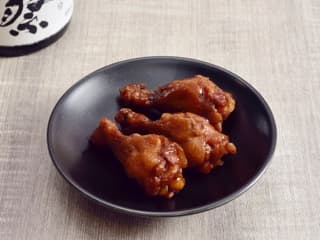
Same-day braise · Cold-chain Taiwan-wide